Indonesia’s path to lasting prosperity depends not on the myth of a strongman savior, but on dismantling elite capture to build institutions that are truly fair, accountable and built to outlast power.
In their book, Why Nations Fail, Nobel laureates Daron Acemoglu and James Robinson posed a simple but profound question: Why do some nations thrive while others fall behind? Their answer was neither cultural nor geographical, but institutional.
Nations succeed, they argue, when political and economic power is distributed broadly, when rules are clear and when citizens can participate meaningfully in shaping their future. They fail when power is captured by the few, when corruption and patronage decide outcomes, and when innovation is suppressed in favor of privilege.
More than two decades into democracy, Indonesia now stands at a defining moment between those two paths. The country has achieved political stability and steady economic growth. Yet beneath this surface lies an uncomfortable truth, our institutions – those invisible systems that sustain democracy, justice and prosperity – are only partially inclusive.
Elections are competitive but increasingly transactional. The rule of law exists but often bends to political convenience. The economy is open but still dominated by oligarchic structures and rent-seeking behavior. Indonesia is free but not yet fair. Extractive institutions don’t just waste public money, but they quietly shape the nation’s trajectory. When political elites capture policymaking, reforms serve short-term interests rather than long-term welfare. When state-owned enterprises (SOEs) dominate key industries without innovation, entrepreneurs lose incentives to take risks. When corruption is normalized, talented young Indonesians learn that loyalty matters more than merit. The result is what economists call “low productivity equilibrium”, an economy that grows, but not fast enough to create prosperity for all.
The weakening of the Corruption Eradication Commission (KPK), politicization of bureaucracy and persistent policy inconsistency across sectors are not isolated incidents, they are symptoms of a deeper institutional malaise. Indonesia risks drifting toward what Acemoglu calls an “extractive equilibrium”, a condition where economic and political power reinforce each other in a loop that resists reform. In such a system, inequality rises, innovation stagnates and trust in government erodes.
Viewpoint Every Thursday ADD THIS TOPIC Whether you’re looking to broaden your horizons or stay informed on the latest developments, “Viewpoint” is the perfect source for anyone seeking to engage with the issues that matter most. View More Newsletter
We don’t need to look far for examples. The promise of the resource boom in the 2010s faded into the familiar cycle of dependency when abundance of natural wealth becomes trapped in a cycle of exporting low-value raw materials, while failing to develop domestic manufacturing and value-addition capabilities. Meanwhile, R&D spending remains below 0.3 percent of gross domestic product, one of the lowest in Southeast Asia. Without institutional reform, Indonesia risks remaining a middle-income country trapped by its own extractive legacy. Inclusive institutions are not about abstract ideals, they are about practical, sustained prosperity. When institutions are transparent and accountable, investors trust the system. When citizens see the law applied equally, social cohesion strengthens. When universities, industry and government collaborate under fair rules, innovation flourishes.
Countries that built inclusive institutions like South Korea, Finland and Norway did not start rich. They became rich because they built systems that rewarded innovation, empowered citizens and limited elite capture. Indonesia can do the same, but only if it treats institutional reform not as a political slogan, but as an economic imperative.
To build inclusive institutions, Indonesia must focus on three strategic fronts. First, political accountability. Reinstate the independence of the KPK, ensure judicial integrity and regulate campaign financing to reduce oligarchic influence.
Second, economic inclusivity. Establish a Natural Resources Fund (NRF) that transforms commodity wealth into education, R&D and infrastructure. The point is to turn natural capital into human capital.
Third, evidence-based governance. Empower scientific institutions such as universities, the National Research and Innovation Agency (BRIN), the Indonesian Academy of Sciences (AIPI) and the National Development Planning Agency (Bappenas) to anchor policymaking based on data, not political intuition.
These reforms will not come easily. They challenge entrenched interests. But without them, the dream of Golden Indonesia 2045 – a prosperous, just and globally competitive nation – will remain out of reach.
Perhaps the hardest reform is not legal or economic, but it is institutional. Indonesia must shift from the myth of the “strong leader who saves the nation” to the principle of strong institutions that safeguard the nation. True strength does not lie in a single charismatic figure, but in systems that outlast any government, personality or crisis.
Civic education, participatory budgeting and digital transparency are tools to rebuild this social contract. Citizens must see that their voice and vigilance, not their silence are the foundations of prosperity. The next generation of Indonesians must learn that loyalty to principle is more valuable than loyalty to power.
Indonesia has all the ingredients for success. A young population, vast resources and an increasingly connected society. What it needs now is the courage to institutionalize fairness to ensure that opportunity, not privilege, drives progress. The question is not whether Indonesia can afford to build inclusive institutions; it is whether it can afford not to.
Because nations fail not when they are poor, but when they lose the will to reform. And nations rise not when they are rich, but when they build the institutions that allow every citizen to share in that richness.
It is time for Indonesia to choose between short-term control and long-term capability. Between extractive comfort and inclusive courage. The future will not wait.
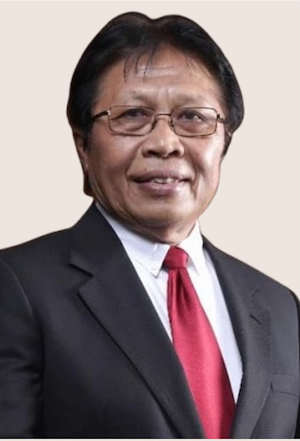
The writer is Chairil Abdini Abidin Said (secretary general of Indonesian Academy of Sciences). The views expressed are personal.
This article was published in thejakartapost.com with the title “”.
Click to read: https://www.thejakartapost.com/opinion/2026/10/15/indonesia-badly-needs-inclusive-institutions-not-rhetoric.